
What Are Hairline Wall Cracks and Are They A Concern
It’s natural to worry if you notice a crack in your wall. While it can be unsettling, it’s important to remember that not all cracks are an indicator of a serious structural issue. Thin or hairline cracks in walls are common in homes, but why do they appear? In this guide, we’ll look at what hairline cracks are, whether they’re an indicator of subsidence, and when you should get professional help.
What are hairline wall cracks?
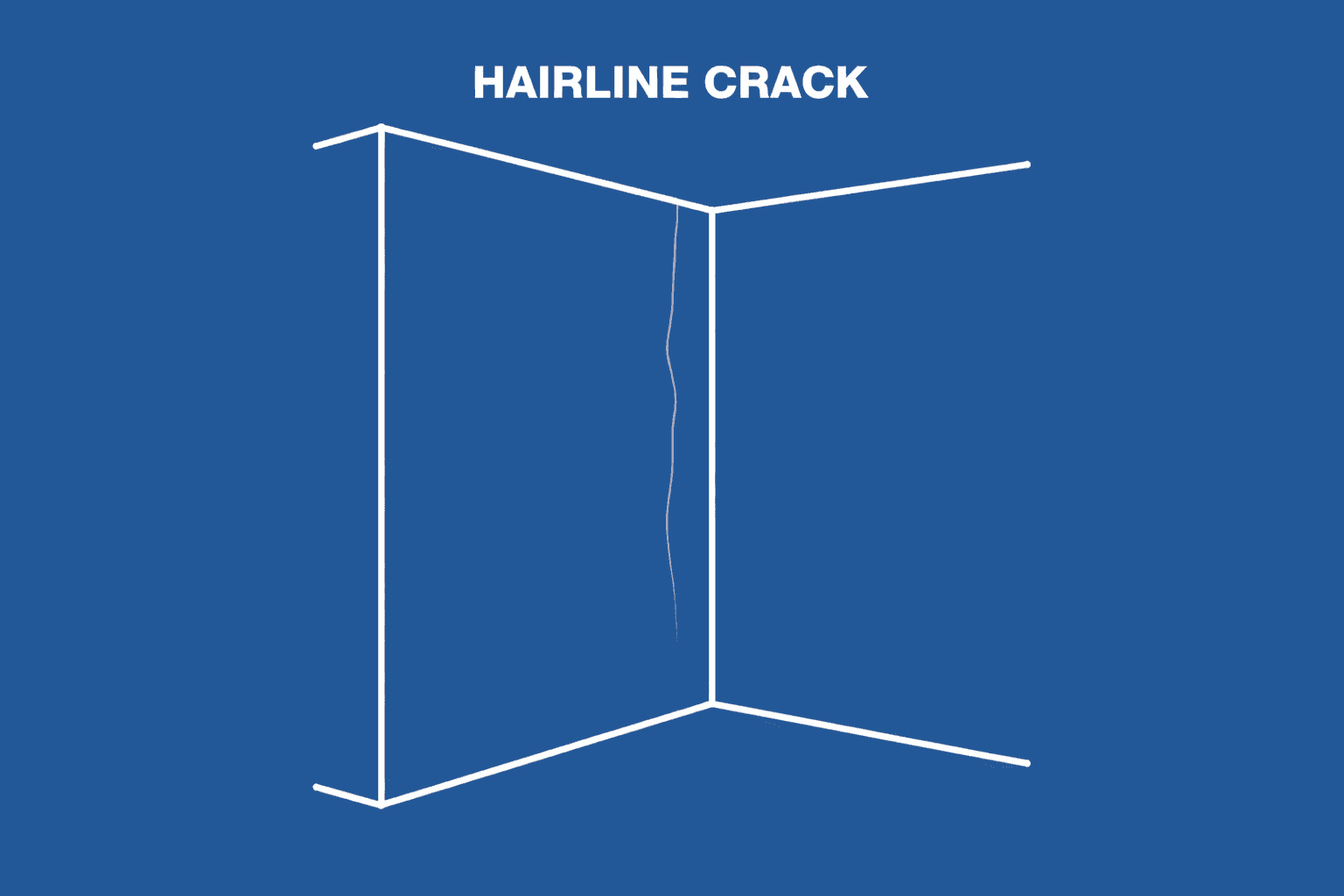
Hairline cracks are very fine cracks resembling hair strands that are typically less than 1mm wide. These thin cracks often appear as:
Vertical or diagonal fine lines
Along plasterboard joints
On plaster or drywall surfaces
In brickwork mortar lines
Common locations include:
Around doors and windows
Ceilings and internal plaster walls
New render
External brick walls
Are hairline cracks normal?
Although their appearance may be unsettling, most hairline cracks are normal and are often a result of:
Natural building settlement (especially in newer homes)
Thermal expansion and contraction
Drying shrinkage of plaster or concrete
Minor ground movement
Poor workmanship or materials
Hairline wall cracks don’t necessarily behave the same way in every material. Below is a list of locations where fine cracks can appear and their probable causes.
Location | Cause |
|---|---|
Plaster walls | Common following seasonal changes or redecorating work |
Concrete walls | Typically related to shrinkage and usually low risk unless they widen |
Brickwork mortar | Usually thermal expansion or contraction |
Plasterboard joints | Joint movement or natural settlement |
External render | Weather exposure or drying shrinkage |
Ceilings | Minor movement or temperature changes |
Are hairline cracks dangerous or just cosmetic?
The majority of hairline cracks are typically cosmetic and are not dangerous. They’re common in properties of all ages, even new buildings. These thin surface cracks rarely affect a building’s load-bearing capacity and don’t usually indicate structural failure. Cosmetic cracks tend to be thin and stable, whereas structural cracks are wider, deeper, and tend to worsen over time.
Are fine cracks dangerous?
In many cases, hairline wall cracks are not dangerous. They are a normal part of how buildings age and respond to their environment.
Do hairline cracks mean structural failure?
Hairline cracks alone do not indicate structural failure. Structural issues typically involve larger, progressive cracks and multiple warning signs, not isolated fine lines in plaster.
Cracks that widen over time:
Multiple cracks appearing in the same area
Recurring cracks
Cracks that become diagonal and stepped in brickwork
Sticking doors and windows near the cracks
If there is a structural problem, DIY repairs won’t resolve the issue. The next step would be to seek professional advice. Mainmark is a specialist in ground engineering and subsidence remediation. If you suspect structural cracks, Mainmark can arrange a subsidence survey at your home, starting with an initial consultation by phone. One of our experts will visit your property to:
Visually inspect your home. They will look for signs of subsidence e.g. cracks, sticking windows and doors and uneven floors.
Take measurements to determine if there has been any settlement or movement of the ground.
Review historic data and records to understand your home’s history and any previous subsidence issues.
Provide a comprehensive analysis based on the size, layout and condition of the property.
Once the subsidence survey is complete, you will receive a report that outlines all the findings. If your property is affected by subsidence, we can advise on how to proceed with treating the underlying cause.
What should you do if you notice hairline wall cracks?
If hairline cracks appear on your wall, it’s worth keeping an eye on them for any changes. This can be done by:
Monitoring the crack by taking photos and measurements over time
Checking for patterns by noting if the location, direction, and recurrence
Repairing cosmetic cracks if stable by using filler or redecorating the room
Only seek professional advice if cracks change or multiply
Do you need a professional to fix hairline cracks?
Most hairline cracks are a result of paint shrinking, drying or natural settlement and are ideal for DIY fixes. Thin cracks can be fixed using a filler, which can then be painted over.
When DIY is acceptable vs when expert assessment matters
DIY methods can be used for very fine cracks, however, it’s important to get expert help if:
Cracks consistently reappear after you’ve repaired them
The cracks become wider than 3mm (roughly the thickness of a 10p coin)
Accompanied by sticking doors, windows or bowed walls
Most hairline cracks are harmless but knowing the difference matters
In short, although hairline wall cracks are worrying, in most cases they’re normal and just a part of the cosmetic changes when a home ages and settles. Stable, superficial cracks in walls can be easily repaired with filler or other simple DIY solutions, however, if you notice the cracks widen or recur over time, or are accompanied by other warning signs such as uneven floors, then you should seek expert guidance.
Mainmark specialises in ground engineering and subsidence assessment and offer in-depth, professional surveys to identify the cause and make recommendations on the best course of action. If you have concerns about the cracks in your walls, contact Mainmark today.
Mainmark’s specialised in-house solutions
Our dedicated team of experts is committed to understanding your unique needs and objectives, working closely with you to develop and execute.
Get in Touch
Our dedicated team of experts is committed to understanding your unique needs and objectives, working closely with you to develop and execute.
What Are Hairline Wall Cracks and Are They A Concern
It’s natural to worry if you notice a crack in your wall. While it can be unsettling, it’s important to remember that not all cracks are an indicator of a serious structural issue. Thin or hairline cracks in walls are common in homes, but why do they appear? In this guide, we’ll look at what hairline cracks are, whether they’re an indicator of subsidence, and when you should get professional help.
What are hairline wall cracks?
Hairline cracks are very fine cracks resembling hair strands that are typically less than 1mm wide. These thin cracks often appear as:
Vertical or diagonal fine lines
Along plasterboard joints
On plaster or drywall surfaces
In brickwork mortar lines
Common locations include:
Around doors and windows
Ceilings and internal plaster walls
New render
External brick walls
Are hairline cracks normal?
Although their appearance may be unsettling, most hairline cracks are normal and are often a result of:
Natural building settlement (especially in newer homes)
Thermal expansion and contraction
Drying shrinkage of plaster or concrete
Minor ground movement
Poor workmanship or materials
Hairline wall cracks don’t necessarily behave the same way in every material. Below is a list of locations where fine cracks can appear and their probable causes.
Location | Cause |
|---|---|
Plaster walls | Common following seasonal changes or redecorating work |
Concrete walls | Typically related to shrinkage and usually low risk unless they widen |
Brickwork mortar | Usually thermal expansion or contraction |
Plasterboard joints | Joint movement or natural settlement |
External render | Weather exposure or drying shrinkage |
Ceilings | Minor movement or temperature changes |
Are hairline cracks dangerous or just cosmetic?
The majority of hairline cracks are typically cosmetic and are not dangerous. They’re common in properties of all ages, even new buildings. These thin surface cracks rarely affect a building’s load-bearing capacity and don’t usually indicate structural failure. Cosmetic cracks tend to be thin and stable, whereas structural cracks are wider, deeper, and tend to worsen over time.
Are fine cracks dangerous?
In many cases, hairline wall cracks are not dangerous. They are a normal part of how buildings age and respond to their environment.
Do hairline cracks mean structural failure?
Hairline cracks alone do not indicate structural failure. Structural issues typically involve larger, progressive cracks and multiple warning signs, not isolated fine lines in plaster.
Cracks that widen over time:
Multiple cracks appearing in the same area
Recurring cracks
Cracks that become diagonal and stepped in brickwork
Sticking doors and windows near the cracks
If there is a structural problem, DIY repairs won’t resolve the issue. The next step would be to seek professional advice. Mainmark is a specialist in ground engineering and subsidence remediation. If you suspect structural cracks, Mainmark can arrange a subsidence survey at your home, starting with an initial consultation by phone. One of our experts will visit your property to:
Visually inspect your home. They will look for signs of subsidence e.g. cracks, sticking windows and doors and uneven floors.
Take measurements to determine if there has been any settlement or movement of the ground.
Review historic data and records to understand your home’s history and any previous subsidence issues.
Provide a comprehensive analysis based on the size, layout and condition of the property.
Once the subsidence survey is complete, you will receive a report that outlines all the findings. If your property is affected by subsidence, we can advise on how to proceed with treating the underlying cause.
What should you do if you notice hairline wall cracks?
If hairline cracks appear on your wall, it’s worth keeping an eye on them for any changes. This can be done by:
Monitoring the crack by taking photos and measurements over time
Checking for patterns by noting if the location, direction, and recurrence
Repairing cosmetic cracks if stable by using filler or redecorating the room
Only seek professional advice if cracks change or multiply
Do you need a professional to fix hairline cracks?
Most hairline cracks are a result of paint shrinking, drying or natural settlement and are ideal for DIY fixes. Thin cracks can be fixed using a filler, which can then be painted over.
When DIY is acceptable vs when expert assessment matters
DIY methods can be used for very fine cracks, however, it’s important to get expert help if:
Cracks consistently reappear after you’ve repaired them
The cracks become wider than 3mm (roughly the thickness of a 10p coin)
Accompanied by sticking doors, windows or bowed walls
Most hairline cracks are harmless but knowing the difference matters
In short, although hairline wall cracks are worrying, in most cases they’re normal and just a part of the cosmetic changes when a home ages and settles. Stable, superficial cracks in walls can be easily repaired with filler or other simple DIY solutions, however, if you notice the cracks widen or recur over time, or are accompanied by other warning signs such as uneven floors, then you should seek expert guidance.
Mainmark specialises in ground engineering and subsidence assessment and offer in-depth, professional surveys to identify the cause and make recommendations on the best course of action. If you have concerns about the cracks in your walls, contact Mainmark today.
Mainmark’s specialised in-house solutions
Our dedicated team of experts is committed to understanding your unique needs and objectives, working closely with you to develop and execute.
Get in Touch
Our dedicated team of experts is committed to understanding your unique needs and objectives, working closely with you to develop and execute.
What Are Hairline Wall Cracks and Are They A Concern
It’s natural to worry if you notice a crack in your wall. While it can be unsettling, it’s important to remember that not all cracks are an indicator of a serious structural issue. Thin or hairline cracks in walls are common in homes, but why do they appear? In this guide, we’ll look at what hairline cracks are, whether they’re an indicator of subsidence, and when you should get professional help.
What are hairline wall cracks?
Hairline cracks are very fine cracks resembling hair strands that are typically less than 1mm wide. These thin cracks often appear as:
Vertical or diagonal fine lines
Along plasterboard joints
On plaster or drywall surfaces
In brickwork mortar lines
Common locations include:
Around doors and windows
Ceilings and internal plaster walls
New render
External brick walls
Are hairline cracks normal?
Although their appearance may be unsettling, most hairline cracks are normal and are often a result of:
Natural building settlement (especially in newer homes)
Thermal expansion and contraction
Drying shrinkage of plaster or concrete
Minor ground movement
Poor workmanship or materials
Hairline wall cracks don’t necessarily behave the same way in every material. Below is a list of locations where fine cracks can appear and their probable causes.
Location | Cause |
|---|---|
Plaster walls | Common following seasonal changes or redecorating work |
Concrete walls | Typically related to shrinkage and usually low risk unless they widen |
Brickwork mortar | Usually thermal expansion or contraction |
Plasterboard joints | Joint movement or natural settlement |
External render | Weather exposure or drying shrinkage |
Ceilings | Minor movement or temperature changes |
Are hairline cracks dangerous or just cosmetic?
The majority of hairline cracks are typically cosmetic and are not dangerous. They’re common in properties of all ages, even new buildings. These thin surface cracks rarely affect a building’s load-bearing capacity and don’t usually indicate structural failure. Cosmetic cracks tend to be thin and stable, whereas structural cracks are wider, deeper, and tend to worsen over time.
Are fine cracks dangerous?
In many cases, hairline wall cracks are not dangerous. They are a normal part of how buildings age and respond to their environment.
Do hairline cracks mean structural failure?
Hairline cracks alone do not indicate structural failure. Structural issues typically involve larger, progressive cracks and multiple warning signs, not isolated fine lines in plaster.
Cracks that widen over time:
Multiple cracks appearing in the same area
Recurring cracks
Cracks that become diagonal and stepped in brickwork
Sticking doors and windows near the cracks
If there is a structural problem, DIY repairs won’t resolve the issue. The next step would be to seek professional advice. Mainmark is a specialist in ground engineering and subsidence remediation. If you suspect structural cracks, Mainmark can arrange a subsidence survey at your home, starting with an initial consultation by phone. One of our experts will visit your property to:
Visually inspect your home. They will look for signs of subsidence e.g. cracks, sticking windows and doors and uneven floors.
Take measurements to determine if there has been any settlement or movement of the ground.
Review historic data and records to understand your home’s history and any previous subsidence issues.
Provide a comprehensive analysis based on the size, layout and condition of the property.
Once the subsidence survey is complete, you will receive a report that outlines all the findings. If your property is affected by subsidence, we can advise on how to proceed with treating the underlying cause.
What should you do if you notice hairline wall cracks?
If hairline cracks appear on your wall, it’s worth keeping an eye on them for any changes. This can be done by:
Monitoring the crack by taking photos and measurements over time
Checking for patterns by noting if the location, direction, and recurrence
Repairing cosmetic cracks if stable by using filler or redecorating the room
Only seek professional advice if cracks change or multiply
Do you need a professional to fix hairline cracks?
Most hairline cracks are a result of paint shrinking, drying or natural settlement and are ideal for DIY fixes. Thin cracks can be fixed using a filler, which can then be painted over.
When DIY is acceptable vs when expert assessment matters
DIY methods can be used for very fine cracks, however, it’s important to get expert help if:
Cracks consistently reappear after you’ve repaired them
The cracks become wider than 3mm (roughly the thickness of a 10p coin)
Accompanied by sticking doors, windows or bowed walls
Most hairline cracks are harmless but knowing the difference matters
In short, although hairline wall cracks are worrying, in most cases they’re normal and just a part of the cosmetic changes when a home ages and settles. Stable, superficial cracks in walls can be easily repaired with filler or other simple DIY solutions, however, if you notice the cracks widen or recur over time, or are accompanied by other warning signs such as uneven floors, then you should seek expert guidance.
Mainmark specialises in ground engineering and subsidence assessment and offer in-depth, professional surveys to identify the cause and make recommendations on the best course of action. If you have concerns about the cracks in your walls, contact Mainmark today.
Mainmark’s specialised in-house solutions
Our dedicated team of experts is committed to understanding your unique needs and objectives, working closely with you to develop and execute.
Get in Touch
Our dedicated team of experts is committed to understanding your unique needs and objectives, working closely with you to develop and execute.